Tuesday, October 9, 2007

Twilight Series by Stephenie Meyer


Is there a woman on the planet who hasn't been sucked in by this series yet? I read about it in BYU magazine because the author happens to be an alumnus, then saw it featured prominently at Barnes in Las Vegas and realized that it's a real book, not just something BYU grads read to support their school. Then my little sis recommended it, then half my ward, then I saw it had won awards from the ALA and other nationally respected organizations, so I gave in. And it was worth it. It took me four days to read all three books, thanks to my pregnancy-induced insomnia.


I've never read much in the way of vampire books, although I loved "I Am Legend" by Richard Matheson. I've never watched Buffy or any of those. Our book club agreed unanimously that when someone told them they should read this vampire book they weren't interested, and when they found out it was about teenage vampires who fall in love they were kind of insulted. But then we all gave in and read them anyway. And found out they really are awesome. They are easy reads, probably not nouveau classics like the Potter books, but original and fun anyway. The writing is good, the stories are great. I like to call them the "Vampire Romance Novels". I was surprised - they're quite sexy! What is my innocent little sister doing reading such steamy stuff? But not trashy at all. This is a BYU grad, after all, and lover boy Edward is kind of a prude.

So if you're a little lost now I guess I should give a summary - teenage Bella moves in with her dad and meets Edward, who is super hot, but a vampire who lusts for her blood. But it's also love at first sight, so they have to figure out how to be together without him sucking her blood. Which sounds really lame, I know, but seriously - if you haven't read these yet, then just go pick one up. It'll only take a few hours of your time to read, and you'll probably be hooked just like the rest of us.


I do have to make one disclaimer about loving these books, though, and I'd love to hear your opinions on this. By the end of book three Bella is kind of starting to bug me. She's a whiner. She's selfish. She's ungrateful. She's kind of a nut job. And all these guys like her why? Also, even though the super-love connection between her and Edward is necessary for the plot, this is not a good role model for all the teens that I know are reading this book. This relationship is seriously unhealthy. Edward is controlling, Bella is so dependent. I had to call my little sis and talk about this, just to be sure she hadn't just read it and thought it all was wonderful. And I just feel bad for Jacob, and kind of root for him even though I know he hasn't got a chance. So there. Oh wait, one more - there's a fourth book due out next year, and I really hope it'll be the last, because even though I really did like these books, I don't think I can hang out for an entire decade waiting for a conclusion like I did for Harry Potter.


As for the stuff I did like: I love the Cullens. Characterization is a major strong point for Meyer. Alice revels in the human world and is always trying to experience it through Bella by throwing lavish parties and things. She's so fun. I wish Bella appreciated her. Jasper is so quietly tormented. Edward is kind of snooty, but magnetic, too. And they drive awesome cars. And I love how the mystery of Edward is set up - Bella's instant attraction to him, his weird behavior, Jacob's "legends", and how in the end Bella just doesn't care. Some people say Bella doesn't seem seventeen, and that they have to imagine her as older to take it seriously, but I think the fact that she chooses to go for a vampire even though she might lose her soul is kind of indicative of her adolescent lack of judgement and tendency to follow hormones rather than brain cells. And then she loses herself completely in him. It's intense, and from an adult perspective seems so foolish, but I think a lot of teen relationships do follow that pattern. I also liked that later on she really does think things through, and even though she comes to the same conclusion it's a decision based on logic as well as passion. She acknowledges what she's giving up, rather than just brushing it off as unimportant. I love the months that just pass in "New Moon" when she is totally depressed. So cool. And I think Edward and Jacob's little showdown in the tent in "Eclipse" is hilarious, especially when Jacob is fantasizing about Bella and Edward is reading his mind. Again, you feel bad for Jacob, but so funny.


If you haven't checked out Meyer's website, it's worth a look. There's some interesting stuff in the FAQ, you can read about her works in progress, and there's some info about the movie they are making. She speculates a lot about who she'd like to play each character, even though she gets no say. I'm no good at these games, but I love her picks. Who would you cast?

Tuesday, September 11, 2007

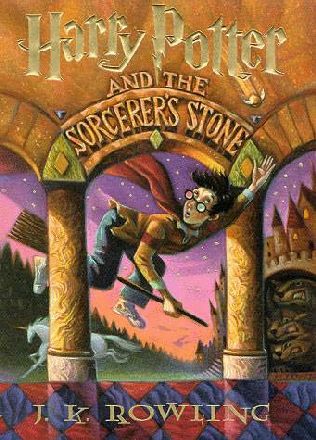
Harry Potter and the Sorcerer's Stone by J.K. Rowling

Gavin and I just finished reading this one. One of the highlights of my day is hearing him ask for "Hewwy Pottow!" at bedtime. We read it in Spanish when he was a newborn. I don't really have much to write about it, though, because I've read it enough times to not need help remembering, and if you know me then you don't need to be told how much I love these books. I own them in nine languages and have been to the opening party of every book and movie since the beginning. If you haven't read it, quit priding yourself on not being a bandwagoner and just buy one already. And if you want an even bigger treat, get the audio version narrated by Jim Dale. The guy is incredible. I'd listen to him read the phone book. From an English teacher's standpoint I could point out a hundred reasons why Rowling is an amazing author, but I'll spare you all that. Rowling is wealthier than the Queen of England and she deserves every penny of it. Hooray for Harry Potter!

Friday, September 7, 2007

Eat, Pray, Love by Elizabeth Gilbert

Another travel book. This one is interesting because it's really not so much a travel book as a memoir of self discovery. Gilbert has a nervous breakdown in her thirties and realizes that she doesn't love her wonderful husband any more and can't bear the thought of having children. So she wallows in major depression for a while, goes through a long, nasty divorce, and finally decides that she needs to get her life in order. So she plans a year long journey; four months in Italy where she will do nothing but things that bring her pleasure. Except sex. Despite being surrounded by gorgeous Italian men, she swears off sex so she can discover who she is on her own, and not as part of a pair. So she learns to speak Italian, which brings her transcendental joy, eats a lot of pasta, and gains thirty pounds. Then it's off to an ashram in India to do yoga and meditate all day long, to get in touch with her spiritual self. Here we get a lot of hilarious dialogue with her inner self as she tries to concentrate on chanting for hours at a time but instead finds herself trying to decide whether her happy place should be a temple or an island or both and how to stop imagining jet skis zooming around her temple-island. Her final destination is Indonesia, where she hopes to learn how to balance the worldly enjoyment of Italy and the divine connection of India. She spends her days helping a hundred year old psychic painter with his English and her evenings partying with expatriates. She finally gives up her vow of chastity and finds true love, which you sort of expected all along. It's a funny, touching, soul-searching kind of book that leaves you wishing you could do exactly the same thing. (Except for the divorce and all that. I kind of like Dave. And Gavin, too.)

I checked out her website looking for an image to post, and it's worth a look if you enjoyed the book. She talks about how she became a writer and her advice for budding writers. Also, she answers some good questions about the book. In the FAQ she responds to " How can I possibly go on a journey like yours, given that I have a busy life of marriage, kids and work responsibilities?" I liked what she had to say, especially since I'd love to do something like this but obviously can't. She says, among other things, "The first question you can begin to ask yourself, though, is: “Where can I find a small corner of stillness?” I liked that. I feel like since I became a mom I'm not really sure who I am anymore apart from little Napoleon's serf. We touched on this in a church lesson I taught recently, too. Even if you can't take the year off to wander around the world, it's so important to find quiet moments to think and ponder and evaluate your life and whether it's going where you want it to. Gilbert says, "God resides in these pockets of silence. So where in your day, where in your home, where in your mind, is there some opportunity for a moment of silence? Or maybe even a few moments, during which you can start asking the questions you need to ask in order to find what you need to learn. Can you find the time to get out of your own way and try to step into your own light?" Kind of like Thoreau's essays on Walden, this book explores what it means to live deliberately.

Wednesday, September 5, 2007

Not So Funny When It Happened edited by Tim Cahill


Another great Travel anthology. Better than "Nowhere", though, because every story in it is hilarious. From bad haircuts to invading baboons, I enjoyed every bit of this book. Some of my favorites:

* Anne Lamott compares her oversize thighs to a pair of beloved maiden aunties in "The Aunties".

* Germaine Shames' Mexican lover proclaims his undying affection for her as she nearly drowns.

* Donald Katz shares his meeting with "The King of the Ferret-Leggers". An insane Irish man with a bunch of ferrets down his pants. How can this not be funny?

* A joke about what Adam and Eve received when God created them. Adam gets the ability to pee standing up, and Eve gets...you'll just have to read it.

The Farming of Bones by Edwidge Danticat

Danticat is one of my favorite authors. I don't know why I'm drawn to her stories - they're always sad, fictionalized accounts of all the horrible things that happen in Haiti, especially between the Haitians and the Dominicans. She's a beautiful writer - I guess that's why I like her, despite the tone of despair that permeates her writing. The Greeks wrote tragedies because they believed that catharsis was good for the soul, and that's what Danticat's books offer - the experience of pain without actually having to go through it. And even though they are sad, they aren't without hope. The terrors of the past and present might be senseless, but there's always the feeling that if the future holds nothing better, we can at least hope to keep enduring.

"The Farming of Bones" is the story of Amabelle, an orphaned Haitian servant living in the Dominican Republic. Although her past has already been scarred by the Dominican hatred for Haitians, she is happy in her friendship with her mistress and her love for Sebastien, a handsome sugarcane cutter who promises to make her his wife and bring her back to Haiti where a better life awaits them both. But instead the nation erupts in violence against the Haitians, and Amabelle is left alone to bear the memories of all those she loses.

Tuesday, September 4, 2007

Saving Fish From Drowning by Amy Tan

The Verdict: Unfocused and unpolished, but engaging and thought-provoking.

Amy Tan is one of my favorite authors. The novel she's most known for is "The Joy Luck Club", but I think "The Kitchen God's Wife" is her best work. "Saving Fish" is an interesting deviation from her typical themes of mother-daughter relationships and Chinese-American culture clashes. It's fun to read something new from her, even if it doesn't outshine the others. "Saving Fish" is the story of a group of American tourists in Burma/Myanmar who wind up kidnapped by a politically oppressed tribe. The books biggest weakness is that it tries to be everything - a bit of a mystery, part travelogue, semi-romantic, some comedy, some politics, and some tragedy. It's too much to pull together into a really good story, but it makes it interesting, too. I guess I feel like there are a lot of really good pieces to this book, even if they don't all come together perfectly.

I wondered for a while about the introduction, in which Tan claims to have dictated this story from the promptings of the deceased spirit of one Bibi Chen, a Chinese-American antiques dealer and humanitarian socialite. It's an interesting frame for the story, giving the book a, omniscient narrator who maintains a personally. This is perhaps the only book I've ever read with such a narrator, and the unique perspective provides some intriguing possibilities. I'd love to read more books with a narrator like this. The intro is as fictional as the rest of the book, however, as she assures us in this interview, which addresses a lot of other interesting points in the book. Bibi Chen never existed outside of Tan's imagination, but it's a great frame for a book that questions the line between fiction and reality.

I also enjoyed reading about the origin of the title. Buddhists believe in doing harm to no living thing, but often find justification to do just that. Tan tells the story of a Buddhist fisherman who goes out every day and pulls in thousands of fish in his nests, saying that he is saving the fish from drowning. He lays them on the shore where they obviously die. Then he takes them sadly to market, so as not to waste them, and uses the money to buy more nets so he can save more fish from drowning. One major theme in the book is intentions and consequences, and it's a frightening example of terrible things happening inadvertently despite good intentions, or very purposefully under the guise of good intentions.

I've never read anything before about Burma, but this book sparked my interest. I'm waiting for "Freedom From Fear" and "The Voice Of Hope" from Amazon, and I'm surprised at how often I hear the political situation there mentioned now. Jim Carrey even posted about it on YouTube. So without any mention of that stupid starfish story, I've decided that although I can't fix everything in the world, Jim Carrey has convinced me that I can do something about this. I'll post about Aung San Suu Kyi's books when I finish them and let you know how it's going. Want to join me? Check out Carrey's video to find out how!

Wednesday, August 29, 2007

Milkweed by Jerry Spinelli

The story of Misha Pilsudski, an orphan boy who lives with a band of juvenile thieves on the streets of Warsaw. We see the holocaust progress through Misha's naive eyes as he finds friends and an adopted family, then loses them all one by one to the Nazi soldiers he once admired.

My verdict: Spinelli is always great. "Stargirl" will make you laugh and cry on the same page, and "Maniac Magee" was one of my all-time favorites growing up. "Milkweed" is a historical fiction, and I was glad to see that it brought something new to the plethora of young adult novels centered around the Holocaust. It's touching but not too graphic. Misha is a lovable narrator, and the supporting characters are richly diverse. Misha has never known his own family, but is adopted by a band of boy thieves, then later by a young Jewish girl and her family. These relationships enrich his life, but also put him in danger and give him a heartbreaking firsthand view of the cruelties of the holocaust. The ending gets a little strange as the adult Misha seems to lose his mind for a while, but I think it's probably an accurate portrayal of what a lot of survivors were like. Identity and family are strong themes in the book, and in the end Misha finally finds both.

Although most of the characters in this book are fictional, Dr. Janusz Korkzac was a real person. He is a very minor character in this book, but knowing his full story really makes the brief mentions of him interesting. Dr. Korkzac was a highly respected psychologist who ran an orphanage and published a mountain of work on how children in any situation could be raised with love and dignity. Although he was not Jewish, he refused to leave his orphans when they were sent to the ghetto, and later to a concentration camp where his life was ended. It's a touching story, and one that should be told more often. "A Hero and the Holocaust" is a great place to start.

Tuesday, August 28, 2007

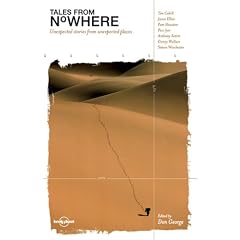
Tales From Nowhere edited by Don George


I finished this one a couple of months ago. Lonely Planet puts out an anthology of travel writing with a different theme every year. I love travel writing, and individually most of these essays are really good, but this book suffers from an ailment common to anthologies. Because they are all written to a single theme, after a while it's just too much of the same thing. For one thing, almost every single essay makes a point of including the word "nowhere", usually as "in the middle of nowhere", so that you can be sure they did, indeed, stick to the topic. Individually this is no problem, but after ten or twenty in a row it starts sounding cliche. And because they are all writing about "nowhere", the book as a whole comes across as a bunch of very well-traveled people having a one-up contest of "You think that's remote? That's nothing! Listen to this!"

But, like I said, individually these are all great stories. A few of my favorites:
* Grounded in In Bihn by Karla Zimmerman - When Zimmerman's bus breaks down in a tiny Vietnamese village she is befriended by the locals and comes to cherish the unique experience. Many of the essays have a similar theme, but this one is succinct, well written, and doesn't get overly dramatic about how "nowhere" the place is, or overly sentimental about how great it turns out to be. It's understated, and I like that.

* In the Wake of Albatrosses by Kery Lorimer - Lorimer and friends travel to Antarctica on a whim. Lorimer's vivid imagery is almost enough to make me wish I could have been there. Almost.

* The Worst Country In The World by Simon Winchester - Painfully hilarious. That's all I can say.

* On The Trail by Karl Tao Greenfeld - This stands out just because it is so absolutely heartbreaking. I really wanted to cry for the guy. Greenfeld went to China to write a book on SARS. For fifteen pages he describes in agonizing detail the difficulties of finding anyone willing to talk, and how after months he finally got on the right track, then spent months more persuing it, only to have his laptop with the nearly complete book and all his notes stolen. OK, maybe I don't recommend reading this one because it's so depressing, but it did stand out.

* The Living Museum of Nowhere and Everywhere by Rolf Potts - Potts is well-travelled and assumes that small town America has nothing to offer him, but finds some fascinating people and stories in a rural Kansas museum. The author is a little pompous in congratulating himself on still being able to enjoy the lowly midwest, even though it's no Paris, London, Myanmar, or India, but it's nice to hear a story that shows you don't have to risk dysentary to connect with "the world".

* A Visit to Kanasankatan by Jason Elliot - Elliot describes visiting a friend in a seemingly exotic place, filled with ethnic looking men, veiled women, shop signs in all languages, foreign sounds and smells, and poverty. In the end we learn his friend lives in North Kensington, London. It's a great twist. I'd love to use this as the basis for a writing assignment.

Monday, August 27, 2007

The Kabul Beauty School, by Deborah Rodriguez

I just finished listening to this book on my iPod. It is narrated by Bernadette Dunne. I love listening to audiobooks, but it's difficult to know whether I really enjoyed the book, or if the narrator made it better than it would have been if I had just read it myself. Anyway, for whatever reason, this was an enjoyable listen.

Here's the Publisher's Summary:

"Most Westerners working in Afghanistan spend their time tucked inside a military compound or embassy. Not Deborah Rodriguez. Here, she tells the story of the beauty school she founded in the middle of Kabul and of the vibrant women who were her students.

When Rodriguez opened the Kabul Beauty School, she not only empowered her students with a new sense of autonomy but also made some of the closest friends of her life. Woven through the book are the stories of her students: the newlywed who must fake her virginity; the 12-year-old sold into marriage to pay her family's debts; and a woman who pursues her training despite her Taliban husband's constant beatings. They all bring their stories to the beauty school, where, along with Rodriguez herself, they learn the art of perms, friendship, and freedom."

Here's what I have to add to it:

This is a nonfiction piece about a hairdresser who travels to Afghanistan as a volunteer in order to escape her abusive husband. Although her rudimentary emergency preparedness skills prove useless, she finds that hairdressers are in high demand. Hair salons were banned by the Taliban and their tools were destroyed, so the Afghan women have few skills and no supplies to rebuild their salons. Debbie realizes that hairdressing is one of a very few careers open to Afghan woman, and that with some training and supplies they can gain financial and personal independence that isn't available to them through any other means. So she decides to stay and open up a school.

I was amazed at the guts of this woman. She leaves behind everything in the states, including two grown sons, and moves to Afghanistan to oversee the school. Her feisty nature often clashes with the local culture - she confronts a groper in the market, stomps over to her Taliban neighbors' with a machine gun to demand they leave her guard alone, and embarrasses a beloved student by asking her to dance at a party. But she's also eager to learn about the culture and makes a sincere effort to understand her Afghani friends. She even agrees to an arranged marriage to an Afghani man who speaks little English and whom she's known only a couple of weeks! I loved the cultural insights and the personal stories of her students. It's obvious that she has a genuine love for them and that the Kabul Beauty School is making a real difference for the woman of Afghanistan. It's an engaging story with rich detail and a realistic but upbeat view of the world of Afghan women.

I Love Barnes (and Noble. Equally.)

I decided I need a blog to keep track of what I'm reading, so here it is. I hope you find something good here!